2005/11/15

早口言葉 

Some Japanese tongue-twisters I came across... Try them...
この竹をこの竹垣に立てかけたのは、竹を立てかけたかったから、立てかけたのです。
Kono take o kono takegaki ni tatekaketa no wa, take o tatekaketakatta kara, tatekaketa no desu.
The reason I have leaned this bamboo against this bamboo fence is that I just wanted to lean bamboo against it.
東京特許許可局、今日急きょ許可却下。
Toukyou tokkyo-kyokakyoku, kyou kyuukyo kyoka kyakka.
The Tokyo patent office hurriedly rejected the approval today.
スモモも桃、桃も桃、スモモも桃も桃のうち。
Sumomo mo momo, momo mo momo, sumomo mo momo mo momo no uchi.
Japanese plums are a kind of peach, a peach is also a peach; both Japanese plums and peaches are kinds of peaches.
この子に常夏のココナツ九つ、あの子にも常夏のココナツ九つ。
Kono ko ni tokonatsu no kokonatsu kokonotsu, ano ko ni mo tokonatsu no kokonatsu kokonotsu.
Nine everlasting coconuts to this child, nine everlasting coconuts to that child too.
鹿もカモシカも鹿だが、しかし、アシカは鹿ではない。
Shika mo kamoshika mo shika da ga, shikashi, ashika wa shika de wa nai.
Deer and antelope are both kinds of deer, but seals are certainly not deer.

Alguém sabe como dizer "tongue-twister" em português? Pode me dar exemplos disso em português?

"Willow Street"

 
My street has a motto.

2005/11/14

Japanese Brazilian Return Migration and the Making of Japan's Newest Immigrant Minority

I think most people are surprised when they learn of the large Brazilian population in Japan, and also of the large Japanese population in Brazil. Here is a very good article which can provide some backgroud information for the curious.

I think what he says about the identity issues of Brazilians, towards the end of the article, holds true for most other immigrant populations in Japan as well. One of my Japanese-Peruvian friends, for example, has lived in Japan since he was 14 years old, speaks fluent Japanese, and even works now as an interpreter for the police department here. Outside of work, however, he shuns being identified as Japanese to the point where he refuses to speak Japanese in most situations, pretending not to understand when being spoken to. He identifies himself as Peruvian. He says that when you learn to speak Japanese well, your personality changes, since to speak Japanese like a native you must obey the etiquette rules of Japanese to hide your foreign-ness, holding back comments, gestures and opinions you might otherwise say in your native language. He doesn't seem to like putting forward the Japanese side of himself; he spends most of his time outside of work hanging out with other foreigners, speaking Spanish, English, or Portuguese.

And he speaks Japanese fluently-- Most foreigners, even part-Japanese foreigners here do not, whether they are Peruvians, Brazilians, Americans, Philipinos, etc.

2005/11/13

浜松城公園

 
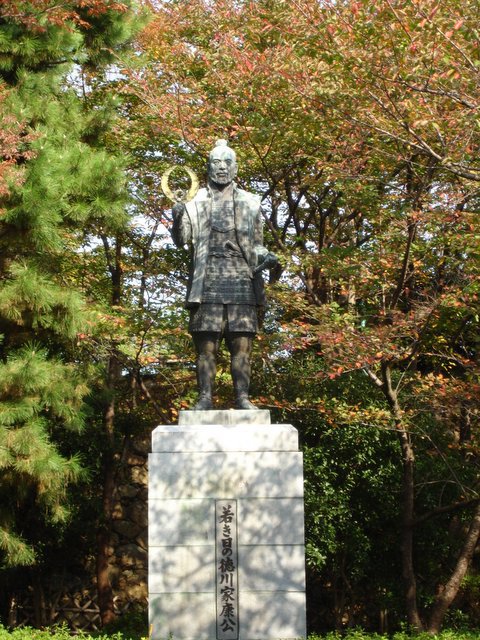
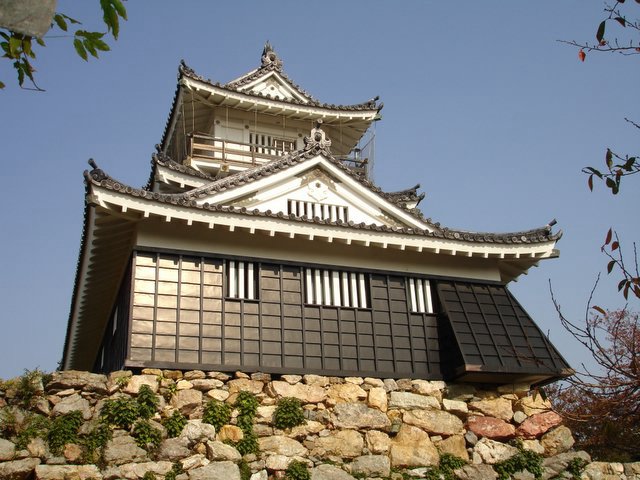
In front of Hamamatsu castle is a bronze statue of its builder, Ieyasu Tokugawa, who is considered perhaps the greatest shogun and one of the three people most important people to the unification of Japan. Tokugawa lived here from 1571 to 1588.
The English brochure they provide at the castle museum says:
Hamamatsu Castle is positioned at the southeast tip of the Mikatahara Plateau. It was built by Tokugawa Ieyasu, whose rule founded the Edo Period (1603-1867). Ieyasu was born in 1542, and spent 17 years at Hamamatsu Castle, from the age of 29 to 45.
 
During this time, many famous battles took place, including the Battle of Mikatagahara in 1572, which was one of the toughest battles fought by Ieyasu. Although Ieyasu's 17-year stay at Hamamatsu Castle endured many difficult years, it did commence 300 years of glorious Tokugawa history.
 
The Lords of Hamamatsu Castle after Ieyasu were always to be very influential figures. In particular, Mizuno Tadakuni, one of the Lords, was credited with reforming the Tempo Era. As a result, Hamamatsu Castle is known as the 'Castle of Success'.
 
The boundary walls of the castle stretched approximately 500 meters from north to south, and 450 meters from east to wast. The castle tower, dungeon, and the 2nd and 3rd buildings were all in a straight line. After the end of the Edo Period, the castle buildings were completely devastated. However, in the spring of 1958, thanks to the efforts of the people of Hamamatsu, the tower of Hamamatsu Castle was re-built, and on June 1st of the following year, it was established as a historical site.

 
This is a well in the basement of the castle.


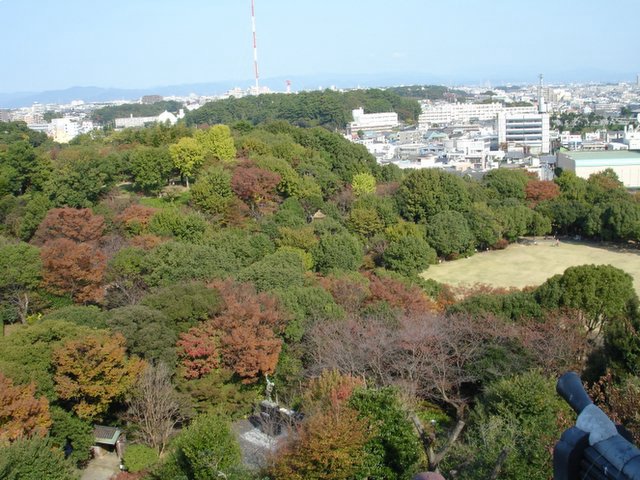
North of the castle is a very big park with a Japanese garden, a ceremonial teahouse, and some commons areas.

 
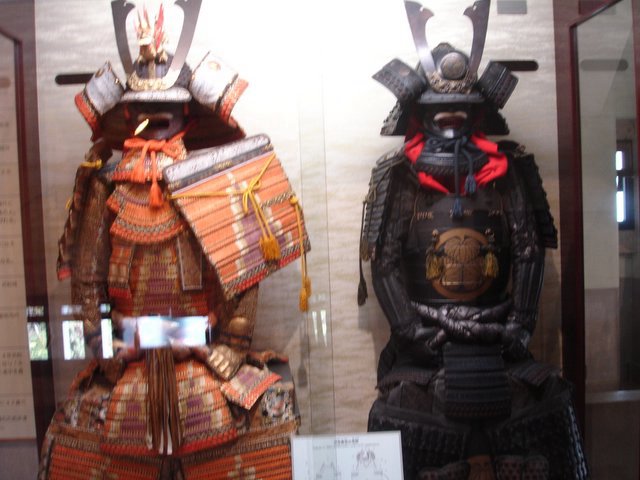
I don't know who this guy is, but he didn't look very happy to see me. (click to enlarge)


Some high school kids hanging out in the park. Notice how some of them are wearing their school uniforms even on Sunday. Can you imagine American kids liking school uniforms so much that they'd wear them when they didn't have to?


Very tall bamboo stalks.

五社神社


Evidently I live in one of the oldest neighborhoods in Hamamatsu. This morning I went to Gosha Shrine, just a couple of blocks from my place, and right next door to Hama Hall. I don't know a whole lot about it, but I suppose it has been around for a long time, because it appears in a miniature model I saw, in Hamamatsu Castle, of Hamamatsu in the period between 1603 and 1867. In the model, there is another shrine just next door to Gosha, but I didn't see another one, so perhaps that one has been destroyed. I also don't really know what was going on at the shrine this morning. There was a woman dancing with bells inside, and a load of dressed up families out front taking pictures of their children in kimonos. I couldn't resist taking some myself.

Esse templo é bem perto do meu apê aqui no certo de Hamamatsu. Não sei o que estava acontecendo hoje de manhã, mas foi irrestitível tirar fotos dessas crianças vestidas de kimono e tal. Muito lindas!

アパートから近い神社でかわいい子供を見て思わず写真をとってしまった。。神社の歴史について何も知らない。知っている人がいたら声をかけてね。

2005/11/09

A walk around my neighborhood.

 
HLO. So yesterday after getting home early, I took a little walk around my neighborhood and took these photos... This first wonderful shop is half a block from my place.

 
Shabby Chic. For the not-so-stylish woman.

 
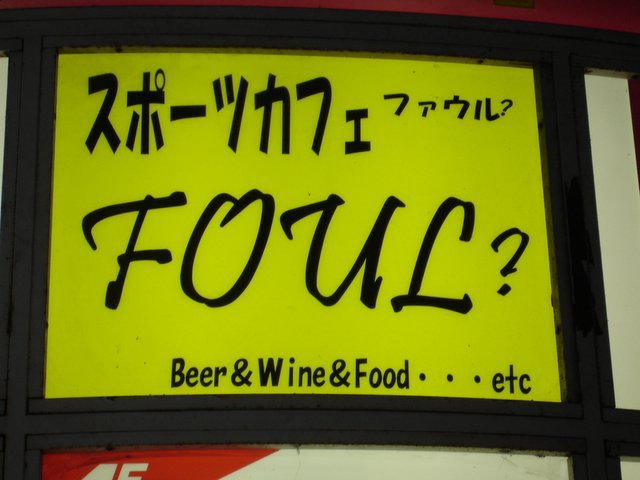
Is "poot" a Hebrew word? Is that kosher?

 
No idea...

 
Hey Buddy, I'll take a Caffé Americano with cream, and a knuckle sandwich. For here.

 
Well, IS it? You tell me!
(To be fair, the Japanese part says "sports cafe," so it's not totally random.)

 
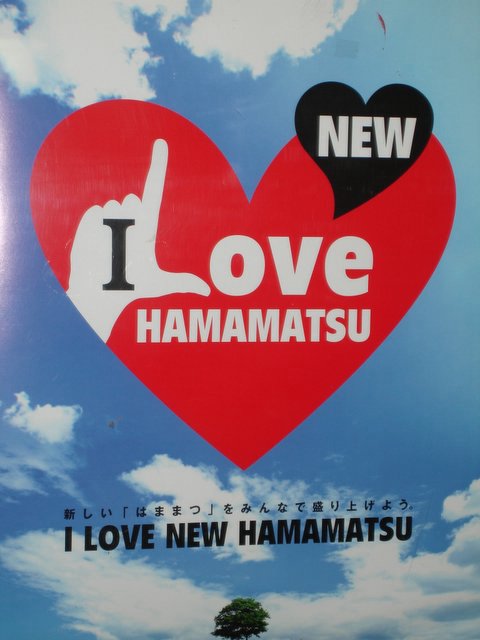
This publicity campaign was thought up by the previous CIR here, and accepted by the folks at city hall just before the CIR remembered that this gesture usually means "Loser" back home in the states.

 
Drawing upon my vast experience of dealing with construction tarps, I deem this to be one of the niftier construction tarps ever.

 
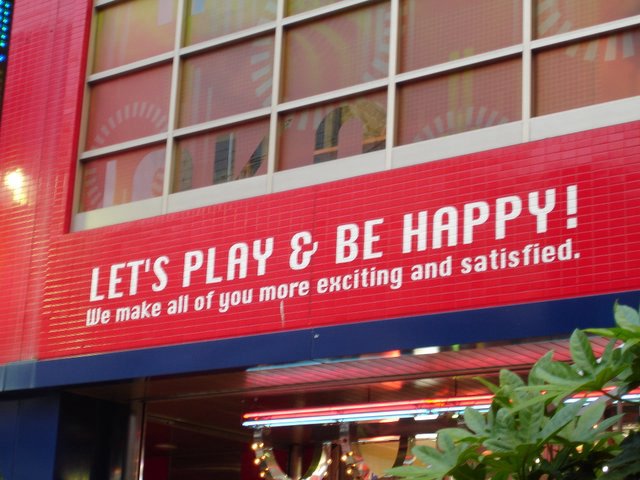
If my blog gets a little boring, remind me to go play a little pachinko so I can get more exciting.
 
Mommyyy... I gotta go weeee-weeeeeee...
Ok, hon.. just be back by 2AM.

 
Cocktailと言う単語はフランス語から来たので、cockともtailとも関係がないね。Tail of Cockとは昔の言葉で訳したら鶏の尻尾の意味だけど、現在の言葉では「チンチンの尻尾」の意味。それっていったい何?

2005/11/08

文化発表会

Today my base school had their annual bunka happyou kai, or "culture festival," though actually it was all music. I got to sleep in this morning because I live much closer to the event location than to the school, so I met everyone there at 9:45. Each of the 16 homerooms performed a song, with one of the students accompanying on the piano and one of them directing. I was a little surprised that there was a decent piano player in each homeroom.  I wonder if they have to take that into consideration at the beginning of the school year when they are assigning classes. Anyway, all the songs were in Japanese, and I didn't recognize any of them except for one group singing that really pretty theme song from Spirited Away. A couple of the groups sounded pretty good, though several of them had one or two boys standing off on the end with their uniforms unbuttoned, head cocked, arms crossed, sucking their teeth in obvious displeasure at having to do anything that wasn't their own idea. Same thing they do during class, bleh.. (I think that's one of them on the far right in this picture above.) My supervisor seemed to imply that last year's bunkasai was practically ruined by bad attitudes, but that it was much better this year. And it wasn't so bad, just a little distracting. At any rate, after all the singing was done, the wind band performed a few songs, mostly stage band tunes like "Tequila" and some 70's rock song I forgot the name of. Except for the first tune, a student was allowed to direct them, and there were a number of good soloists.  The odd thing for me was that the band had about 40 girls and only 4 boys. (I suppose that is a result of the system of only letting the kids be in one club. If they are in band, they can't do any sports, so I guess a lot of the boys choose sports.) After the band played, two of the teachers gave a kind of silly rock guitar performance, complete with light show, a pile of stompboxes, and some noodle-rific guitar licks.  They really played it up as if they were rock stars, striking poses and headbanging, to the absolute delight of all the students. Really hilarious. Then they had a short awards ceremony to announce the winners of the singing competition, and I was home by 2:45.
These photos are unclickable
for the previously mentioned reasons.

2005/11/07

Mais um dia em Takaoka...

Fui hoje para uma escola primária onde cada aula tem 2 ou 3 brasileiros. Alguns deles nem falam muito de japonês, coisa que me surpreendeu porque tem uma escola brasileira lá no mesmo bairro. A professora que me deu carona ajuda eles mas pelo que ouvi, ela não fala tanto de português. A escola tem até placas em português em frente de cada sala... Além disso, das tres aulas que eu dei lá hoje, teve duas criancas que já falam inglês quase nativamente, melhor que qualquer professor japonês que conheci aqui. Uma delas passou 6 dos seus 11 anos morando no estado americano de Ohio. Na hora do almoço, fui sentado entre ela e um menino brasileiro, ele me perguntando coisas em português e traduzindo em japonês pro amigo dele, ela me perguntando em inglês e traduzindo em japonês pras amigas dela. Acho que eles nem perceberam que eu também entendia a maioría do que falavam em japonês, mas tudo bem. Foi interesante. Porque será então que os alunos brasileiros na escola segundária mal me dão um oi?

新鮮な小指?


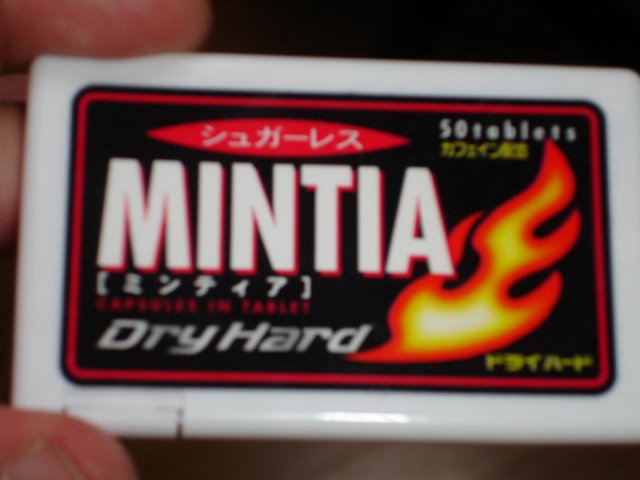
Say hello to my fresh pinky! I feel it's gotten a lot fresher since I started taking this new product, though I'm not sure if it's my left or right pinky that is fresher. Perhaps I should consult a freshness specialist.

また変な英語だね。Pinkyとは俗語で小指と言う意味だ。他には意味がない。Freshとは、新鮮。だから、アメリカ人は「小指をもっと新鮮にする薬ですか」と言う洒落もちろんあるね。

Actually it's a slightly funny-tasting breath mint. For a country with such rampant, unchecked halitosis, there is a bewildering variety of breath mints available here. There is a certain co-worker with absolutely vomitous breath, who should really put himself on some Fresh Pinky.  And when I say "vomitous," I do mean that that is exactly what it smells like. Consistently. Every time he talks to me. Maybe what he really needs is some Dry Hard.

2005/11/06

浜松マンドリンオーケストラ

The concert was interesting. The program had a funny drawing of an Indian boddhisatva playing a very Italian looking bowlback mandolin. The group was composed of a section of maybe 15 mandolins in place of the normal violin section, guitars for the viola section, maybe 4 or 5 mandolas or mandocellos, a string bass section, a clarinet, an oboe, a flute, a harp, and percussion. My co-worker is the first mandolin, concertmaster I guess. They did one set of classical stuff, a Verdi overture, a Mozart sonata, Debussy's Claire de Lune, etc. And then some pop stuff-- Unchained Melody, a tune from the King and I, a tune from Howl's Moving Castle, etc. It was pretty cool. A unique but not unfamiliar sound.
I forgot my camera, but there is a photo of the group (along with, inexplicably, a photo of a blimp) here.
Their website is only in Japanese.

2005/11/05

携帯から

Evidentemente da pra postar usando meu celular tambem, mesmo que nao consigo acesar o proprio blog. Este aqui e um teste.

2005/11/04

Snowee Café


If you haven't been introduced to the phenomenon known as Engrish, you are missing out on an endless source of laughter. For some reason, it is super-cool in Japan to use English on any and everything, yet no one seems to check their English to see if it makes any sense. I'll post pictures of the Engrish I come across from time to time, starting with this fine specimen here to the left.

Welcome to Snowee Café. What you see here are parts of a gigantic sign on the wall of this restaurant, on the sixth floor of MayOne, inside Hamamatsu station. It is presented as if it were a menu, but try clicking on each picture and see if you can make any sense out of this at all. Classic!

Festival de Samba

 
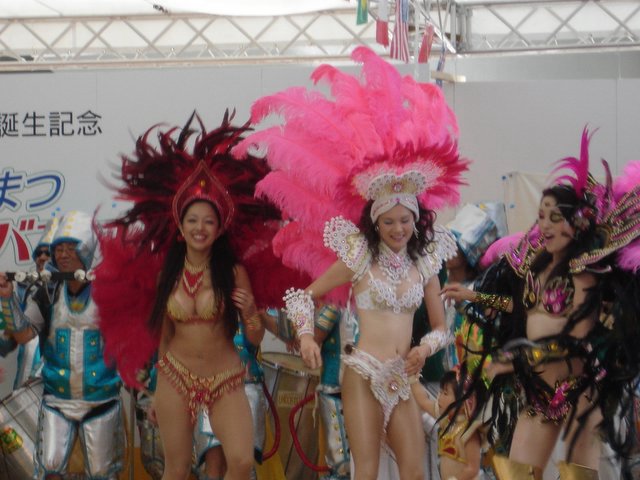
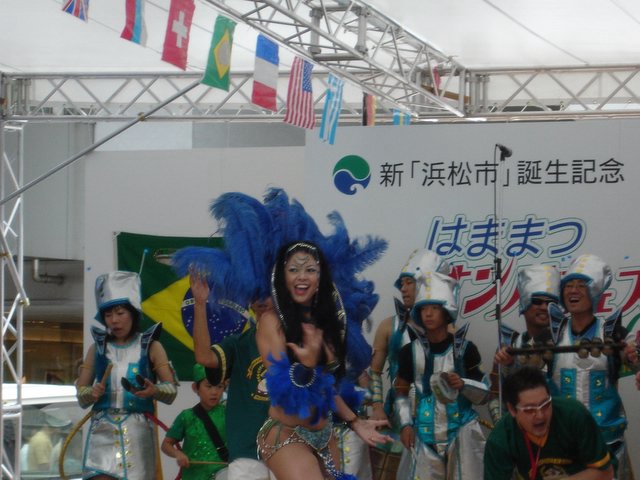
ちょっと遅いけど、先月8日新浜松駅前でこの写真をとった。ブラジル人の祭りだった。写真はサンバのグループだ。ブラジルの音楽も踊りも食べ物の屋台もあった。よかった。

Posting these a little late-- I took these on the 8th of last month at a Brazilian festival over near Shin- Hamamatsu station. These three shots are of a samba troupe performing, but there was also other kinds of music and dance, and Brazilian food stalls. Quite nice.

Um pouco atrasado, mas eu tirei essas dia 8 de outubro, na festival brasileiro em frente da estação Shin- Hamamatsu. Teve varios grupos de música e comida brasileira. Esfiha, espetinho, bolinhas, etc. De verdade, nem toda a música foi boa, mais o tempo foi bom e eu me diverti...

2005/11/03

文化の日

OK, so I was pretty annoyed at livedoor for the way IE displayed the page, but this site seems to do wonderfully, so here we go again...

Anyway, today was a holiday for me-- Bunka no Hi, or Culture Day. It's kind of nice to have a holiday in the middle of the week. Only three classes tomorrow, and then the weekend. Monday after first period at my base school, I have to go to another elementary and teach three classes of 5th graders. That should be fun-- The elementary school kids always make me feel like a celebrity. They have so much energy, plus they haven't yet developed the reluctance about speaking English like the middle schoolers have... Then on Tuesday, my base school is having it's Culture Day festival at Hamamatsu Hall. Each homeroom class has a song they have been practicing to perform on that day, as a kind of contest. For the record, neither of my schools has a choir, only this kind of singing contest involving everyone once a year. So the singing performances will take up most of the day. Perhaps there are some other things planned.. I'm not sure.

Also, this Sunday afternoon I'm going to see one of my co-workers perform in the Hamamatsu Mandolin Orchestra. I'm not really sure what to expect. I assume it will be classical music, but I don't really know. Mandolin orchestras are composed of mandolins, mandolas, mando-cellos, and mando-basses. They were popular in the US in the very early part of the 20th century, but apparently they are still fairly common in Japan. Some of the high schools here even have mandolin clubs...

In other news, I bought a round-trip plane ticket to Bangkok for Dec. 22-Jan. 1. It's a shame I'll have to be waiting at the airport for my return flight during any New Year's Eve festivities, but I couldn't find any other flight for the given time frame. My friend Doug teaches English in Bangkok, so hopefully he can show me around a bit this time. There are also several other JETs going to Thailand, but nobody seems to have their plans exactly hammered out yet, so I don't know if I'll see any of them there...

2005/10/08

自己紹介など。。。

a02a1bcc.JPGWell, I will try again to keep a blog. Hopefully I will keep it up longer this time. 頑張るぞ! If you just see a lot of boxes or garbled text here, it just means your browser isn't configured to display Japanese text. Just skip whatever you can't read.

Tambêm vou escrever em português de vez em quando.

私はアメリカ人です。テキサス州からきて、今静岡県浜松市に住んでいます。二つの中学校で英語を教えています。楽しかったり大変だったりです。興味のない 生徒に教えること難しいですね。去年ずっと鳥取県鳥取市で英会話イーオンの先生として働いていました。最初の一年目での日本で過ごした日々はとても印象的 でした。本当に優しいひと達に会いました。よかったです!この二回目の来日も現実になった夢です。今浜松には二ヵ月半ぐらい居ます。浜松が大好きです。と ても国際的だからというのがその理由です。浜松地方は少なくとも三万人のブラジル人と約四千人のペルー人がいます。ポルトガル語を話すことが好きなので浜 松に来ました。楽しい!

下手な日本語で、ごめんなさい!

So anyway, you can just ignore it if you can't read it. It's just a sort of a self-introduction. You probably already know that I'm from Texas, that I lived in Tottori, Japan last year and that now I live in Hamamatsu teaching English to 500+ insane, hormone-ridden, Japanese junior high monkeys. I've been here two months already, and I only just now get around to starting a blog... More, after these messages:

----------------------------------------------------------------

Bom, vou me apresentar um pouco em português tambêm. Sou um norte-americano do estado de Texas. Faz 4 anos que estudo português. Vivo apaixonado pelo Brasil, que passei 4 meses viajando la, adoro música brasileira, leio de Machado de Assis e Jose Alencar até Clarice Lispector e Luís Veríssimo. Já estou querendo muito me mudar para o Brasil, abrir uma escola de ingles talvês, quem sabe. Mas é dificil para americano tirar o visto, a carteira de trabalho e tal. Daí pensei que se eu fosse ter mais experiência dando aulas de ingles, poderia mais facilitar uma mudança pro Brasil.

Assim cheguei no Japão em janeiro de 2004, sem saber nada do Japão nem saber falar nada do japonês. Passei ano passado inteiro em Tottori-ken, no meio do nada, dando aulas de ingles numa escola particular lá, e aprendendo um pouco de japonês. Gostei. Nem tanto quanto eu gosto do Brasil, mas gostei. Em dezembro, o contrato acabou e eu voltei pros EUA por 7 meses. Trabalhava de novo na loja de partituras musicais enquanto esperava saber se eu ia ser escolhido pelo programa JET, pra voltar ao Japão e dar aulas de ingles nas escolas publicas. Fui escolhido, graças a Deus, e no fim de julho vim morar aqui em Hamamatsu, que fica no litoral sul à meio caminho entre Tokyo e Osaka na linha do trem bala.

Pedi Hamamatsu porque a cidade tem, de uma populacão total de 800.000 pessoas, mais ou menos 30.000 brasileiros. Em baixo aqui tem os dados oficiais da populacão estrangeira aqui. A maioria do brasileiros são descendentes de japoneses, e me parece que a maioria são ou paranaenses ou paulistas. Hamamatsu tem restaurantes brasileiros, lojas, açougues, agências de turismo, bares, tudo, falando relativamente. Eu estou gostando muito.

---------------------------------------------------------------

Anyway, Hamamatsu has been a blast so far. It's a city of about 800,000 people, very spread out over a large area on the shinkansen (bullet train) line almost exactly halfway between Tokyo and Osaka, on the south coast. It is known as the City of Music, because many musical instruments are produced. (Hamamatsu's only skyscraper is supposedly designed to look like a harmonica, though I've never seen an oval-shaped harmonica...) Hamamatsu is famous for several other things too: eel, green tea, and automotive parts. There are a lot of factories here and loads and loads of Brazilian-Japanese immigrants who work at them. Hamamatsu is ridiculously international for its size. A real oddity in Japan. Have a look:

Hamamatsu Non-Japanese Resident Population
Brazil 17,255
Philippines 3,291
China 2,366
Peru 2,088
Korea (N&S) 1,691
Vietnam 914
Indonesia 950
USA 178
Nepal 158
Canada 90
UK 73
Australia 46
New Zealand 25
Other (68 countries) 934
Total (81 countries) 30,059
(Thanks to HICE for the figures)

The above is the official count of legal foreigners here, but the total number of Brazilians is closer to 30,000 and of Peruvians maybe 4,000. Not sure about the others. At any rate, it's an interesting mix, and you can't walk down the street without noticing it.

The diverse international population also gives Hamamatsu a pretty wide range of restaurants, which is great. There is a Brazilian rodizio and a number of other Brazilian restaurants, a German beer garden, a couple of French and French-colonial places, a Russian restaurant, several Indian restaurants, Indonesian, lots of Korean and Chinese places, etc. There's a Nepalese restaurant a block from my apartment-- when's the last time you saw a Nepalese restaurant? But ALAS, there is no Mexican food here. Most grocery stores carry Old El Paso products, and I can pay a fortune for a few tortillas at one of the import shops, if I want. That's about as close as I can get... Oh for a sizzling pile of fajitas with guacamole and pico de gallo... mmmm........

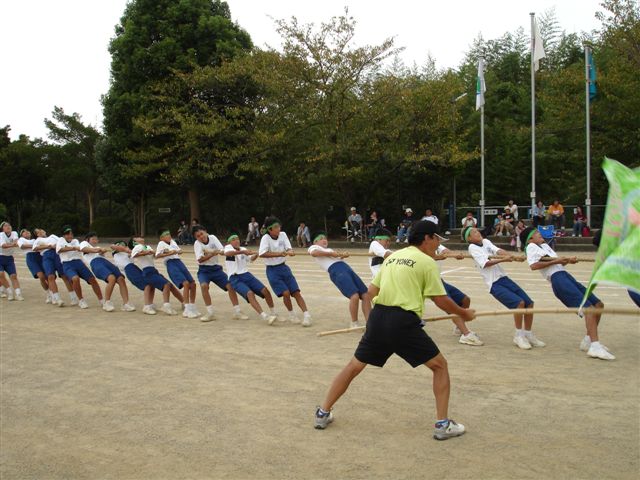
Anyway, I will certainly go into more detail about my schools, but for now, just a picture of some kids playing tug of war at the sports meet at my smaller school. Every high school and junior high in Japan has a sports day once a year in which every student participates. They are divided into a few teams, 4 in this case, and they do lots of races, relays, tug of war, jump rope, etc. It's an all day affair, and they have a lot of practices for it beforehand. The kids enjoyed it, and I did too. Normally you will be able to click on the pictures to enlarge them, but I don't want to put any recognizable photos of my students on the net, so I disabled it this time.

Please leave me a comment, so I know I'm not writing in vain!

Deixe um commentário, que eu quero saber que nao escrevo em vão. E se tiver erros no meu português, faça a favor de me corrigir, ok?

コメントを書いて下さい!間違えた日本語があったら、訂正をしてくれませんか?もっと正しく話したい。。よろしくお願いします。。。